Table of Contents
Most visitors come to Salalah for the beaches, the mountains and the Rub Al Khali Desert. A farm is not the first thing you think of. But Razat Royal Farm is now one of the most popular attractions in Dhofar. Every operating date through July and August was sold out as the farm approached its first anniversary. Here is what you will see and how to plan your visit.
What is Razat Royal Farm?
Razat Royal Farm is on Sultan Qaboos Street in eastern Salalah. It covers about 1,085 acres, and 900 of them are cultivated. It belongs to Royal Court Affairs, and the tourist trail opened on August 18, 2025, under the Royal Orders of His Majesty Sultan Haitham bin Tarik.
The idea is agritourism. You visit a working farm, see how it runs and learn why agriculture matters for Oman’s development and food security.
What you will see on the trail
The tour is a guided bus ride. It starts at an outdoor reception hall, passes through several stops on the farm and ends at a facility with visitor services.
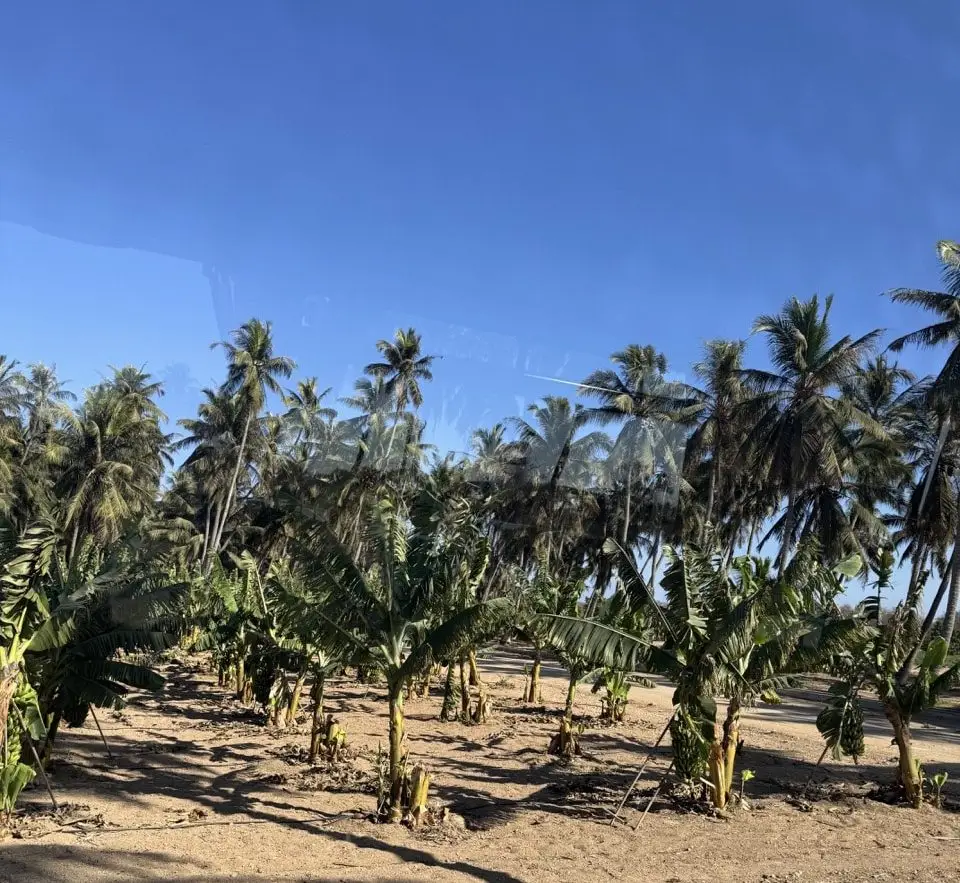
On the way you pass tropical and perennial trees, fruit orchards, vegetable farms and dairy farming. In the banana section you can see several varieties side by side, including Williams, Razat, Dwarf Cavendish and the local Salalah banana. The farm also has a banana gene bank and a ripening unit.
Keep an eye out for a preserved tractor from the 1950s and a historic agricultural jar from the time of Sultan Said bin Taimour. The farm is also a bird sanctuary, so bring a camera.
The stories behind the farm
The Razat banana. The farm gave its name to its own banana variety. It started as a natural mutation in a field of Williams bananas. After more than seven years of study, it became a variety of its own. It can be harvested about three weeks earlier than Williams and gives heavier bunches.
Oman’s first local pineapples. For nearly 15 years, the farm’s team tested whether pineapples could grow in Oman. They started with containers, then moved to shaded fields and greenhouses. They tried several varieties, including Queen, Mauritius and MD-2. The mild, humid weather of the khareef suits the crop, and the growing season runs from July to December.
The falaj. Part of the farm is watered through a falaj about 13 kilometres long, which brings water from Ayn Razat. The farm uses both traditional and modern aflaj.

Why it matters
Razat shows how Oman is developing its agriculture today, with research, local innovation and tourism working together. It also gets official attention. Rwanda’s President visited the farm during a trip to Salalah. The farm director has said the trail will get more interactive stations, so it may be different the next time you come.
Entry ticket prices
Tickets are sold online at razatfarm.gov.om. Prices are per ticket, in Omani rials (OMR).
| Visitor | Age | Price |
|---|---|---|
| Omani and GCC nationals | 13 to 59 | 2.000 |
| Residents | 13 to 59 | 3.000 |
| Tourists | 13 and over | 3.000 |
| Children, Omani and GCC nationals | 6 to 12 | 0.500 |
| Children, residents and tourists | 6 to 12 | 1.000 |
| Children | Under 6 | Free |
| Senior citizens and persons with disabilities (Omani, GCC citizens and residents) | Over 60 | Free |
| Social security families | All | Free |
Free tickets for children under 6 must be added to a booking with an adult ticket. For the senior, disability and social security tickets, you must show proof of eligibility when you arrive.
Planning your visit
Book your tickets in advance at razatfarm.gov.om. Popular dates sell out, so reserve as early as you can.
The khareef, from roughly late June to September, is the greenest and busiest time. It also overlaps with the pineapple season. Go early in the day if you can, and bring water, a hat and sunscreen.
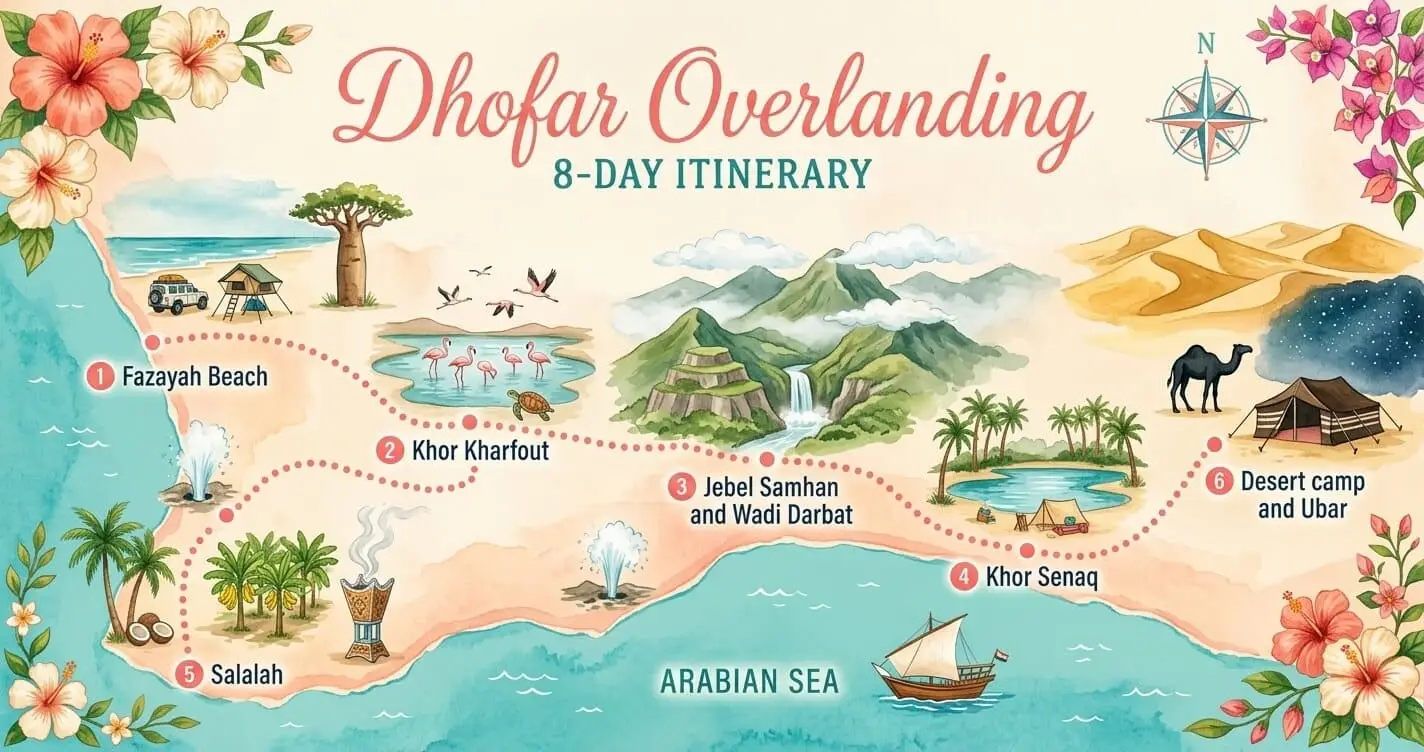
Razat is in eastern Salalah, so it is easy to combine with other stops. Pair it with the Museum of the Frankincense Land, the souq or Al Haffa Waterfront. If you are on our 8-day overlanding route, Day 5 is a good fit.
These rules matter most:
- Arrive 30 minutes before your visit time. If you are late, you will not be allowed in, and the ticket is void, non-refundable and non-exchangeable.
- Check the days. The trail is closed on Fridays, Saturdays and official holidays.
- Bring your ID. Show your ticket and an ID card, resident card or passport at the entrance.
- Dress modestly. This applies to men and women. Visitors who do not follow the dress code can be refused entry without a refund.
- Leave food and drinks behind. They are not allowed inside the farm.
- Park at the reception area. Buses take you to the farm, and personal vehicles are not allowed inside.
- Stay for the full visit. You cannot leave before your visit time ends, and you must follow the route and the guide’s instructions.
- Children aged 12 and under must be accompanied by a guardian.

Yes. Tickets are sold online at razatfarm.gov.om.
Adults pay 2.000 OMR (Omani and GCC nationals) or 3.000 OMR (residents and tourists). Children aged 6 to 12 pay 0.500 or 1.000 OMR, and children under 6 are free.
Fridays, Saturdays and official holidays.
Yes. Children under 6 enter free, and children aged 12 and under must be with a guardian.
No. They are not allowed inside the farm. But can be purchased on site.
It is a real working farm with its own banana variety, Oman's first local pineapples and a traditional falaj.