Salalah Weather & Climate Guide: Best Time to Visit, Sea Temperatures & What to Pack

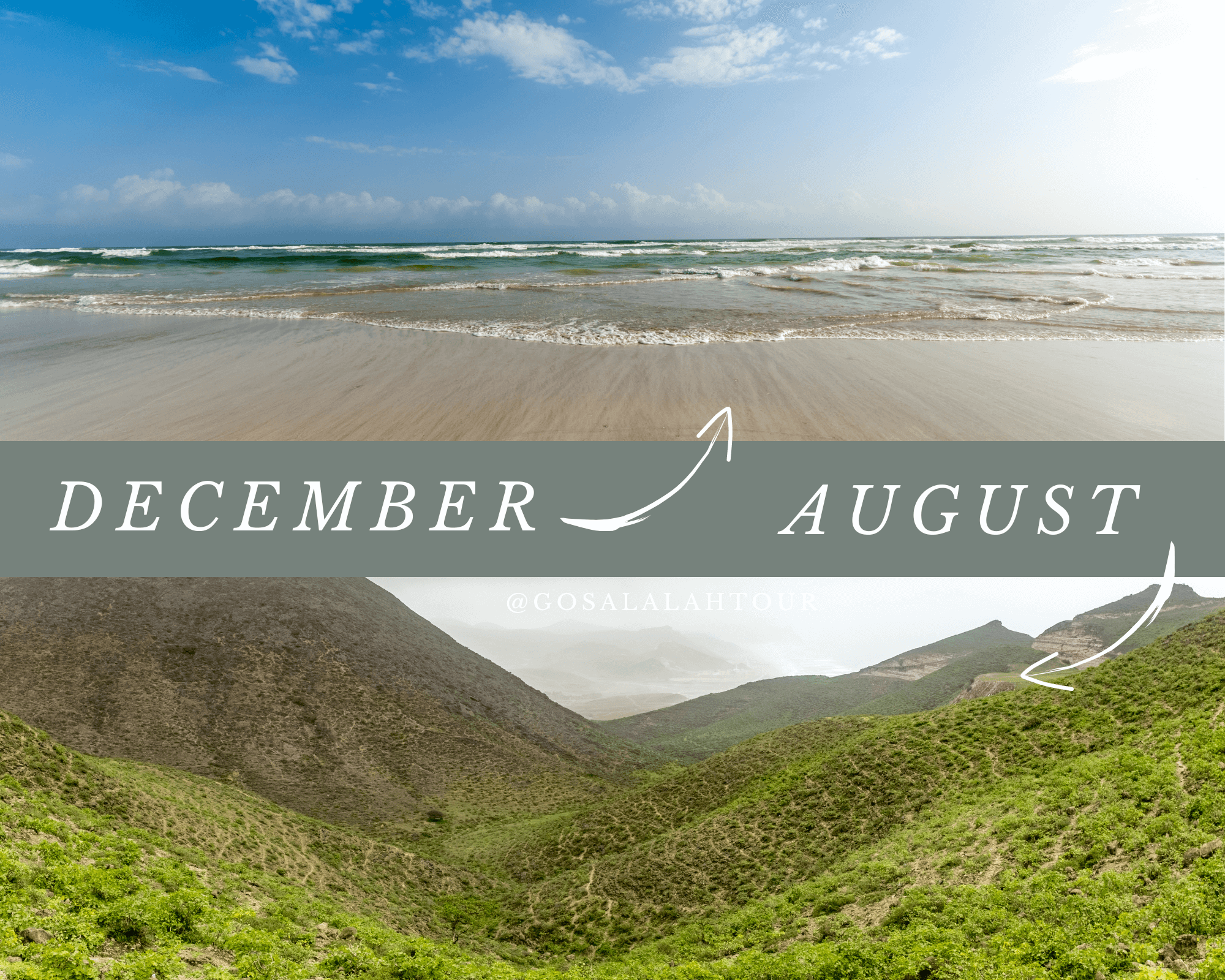
Weather Salalah in December and August Compared

Table of Contents

While most of the Arabian Peninsula experiences sweltering desert heat, southern Oman enjoys a unique tropical microclimate. Tucked between the dramatic Dhofar Mountains and the azure waters of the Indian Ocean, Salalah offers a weather pattern unlike anywhere else in the Middle East.

From misty emerald mountains during the summer monsoon to sun-drenched beaches with warm, crystal-clear waters in winter, understanding Salalah’s weather is the key to planning your perfect Omani getaway.

Salalah’s Two Distinct Seasons

Salalah effectively operates on two main travel seasons: the misty, green Khareef Season and the sun-soaked Dry Season.

1. The Khareef Season (Monsoon: Late June to September)

The word Khareef translates to “autumn” in Arabic, but in Dhofar, it refers to the southwest monsoon. While the rest of Oman sees temperatures climb above 40°C (104°F), Salalah cools down to a refreshing 20°C–28°C (68°F–82°F).

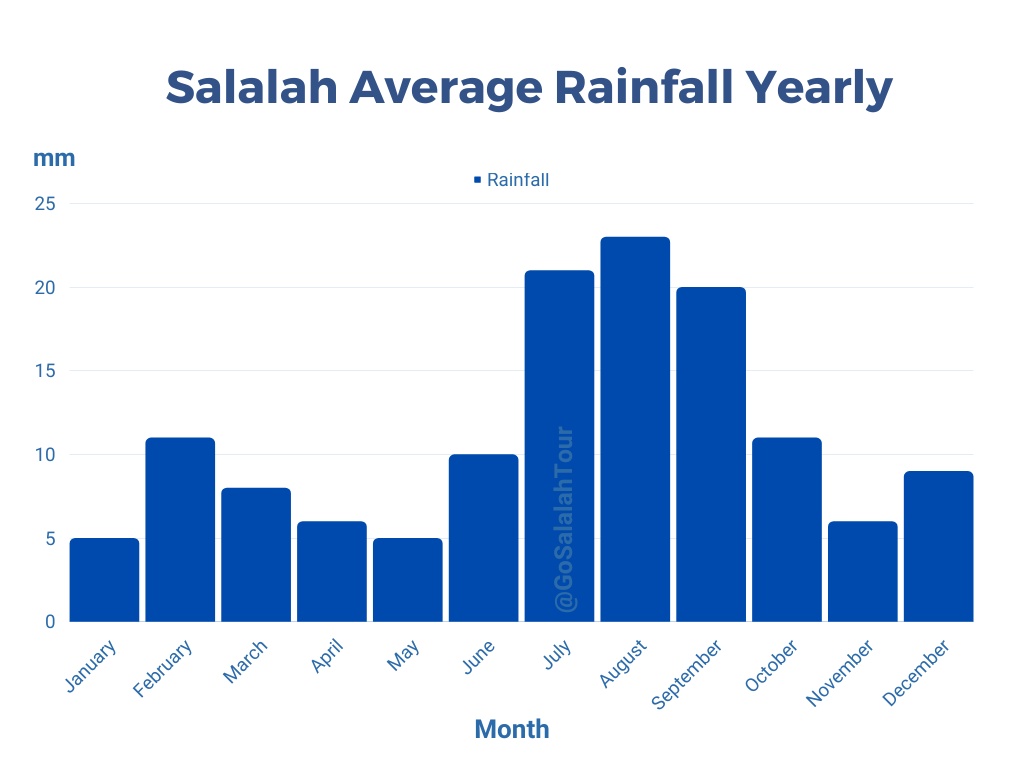
  • What to Expect: A gentle, continuous mist and drizzle (Rathath) covers the city and mountains. Dry wadis transform into cascading waterfalls, and carpeted green hills emerge across the countryside.

  • Sea Conditions: The Indian Ocean becomes rough with high swells and strong ocean currents. Coastal swimming is generally suspended, but watching the powerful blowholes at Mughsail Beach is a spectacular highlight.

2. The Dry & Sunny Season (October to May)

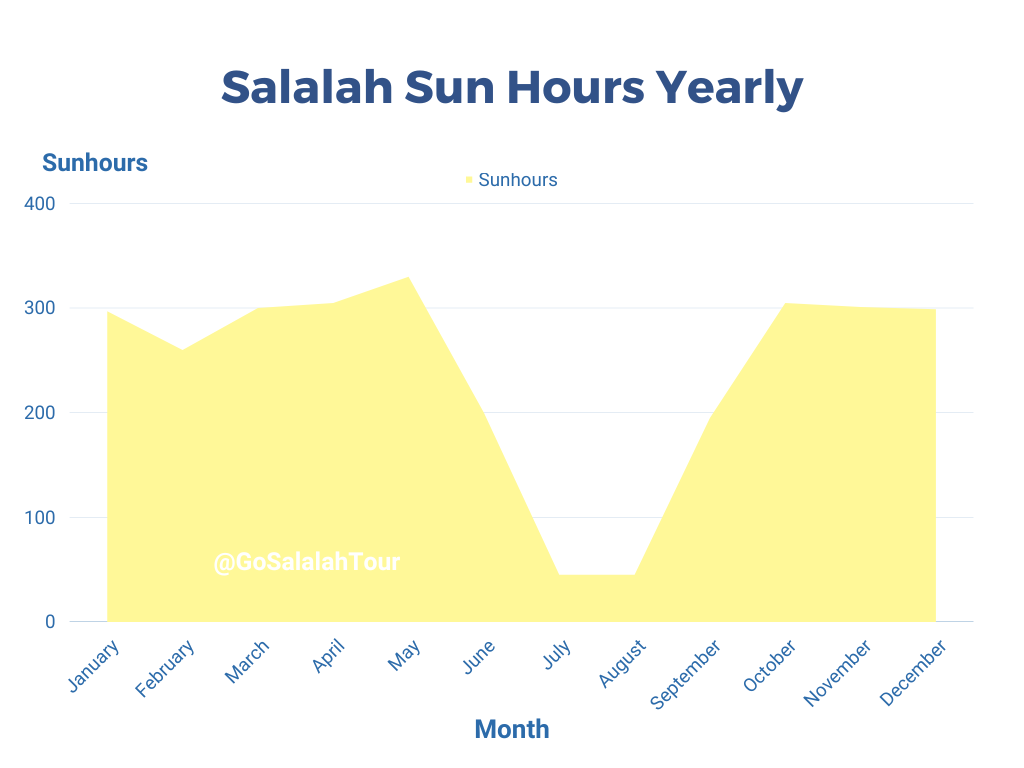
Once the monsoon clouds disperse in October, Salalah turns into a classic tropical beach paradise with cloudless blue skies and an average of 9 to 10 hours of daily sunshine.

  • What to Expect: Mild daytime temperatures ranging between 28°C–32°C (82°F–90°F) with crisp, cool evenings around 19°C–22°C (66°F–72°F).

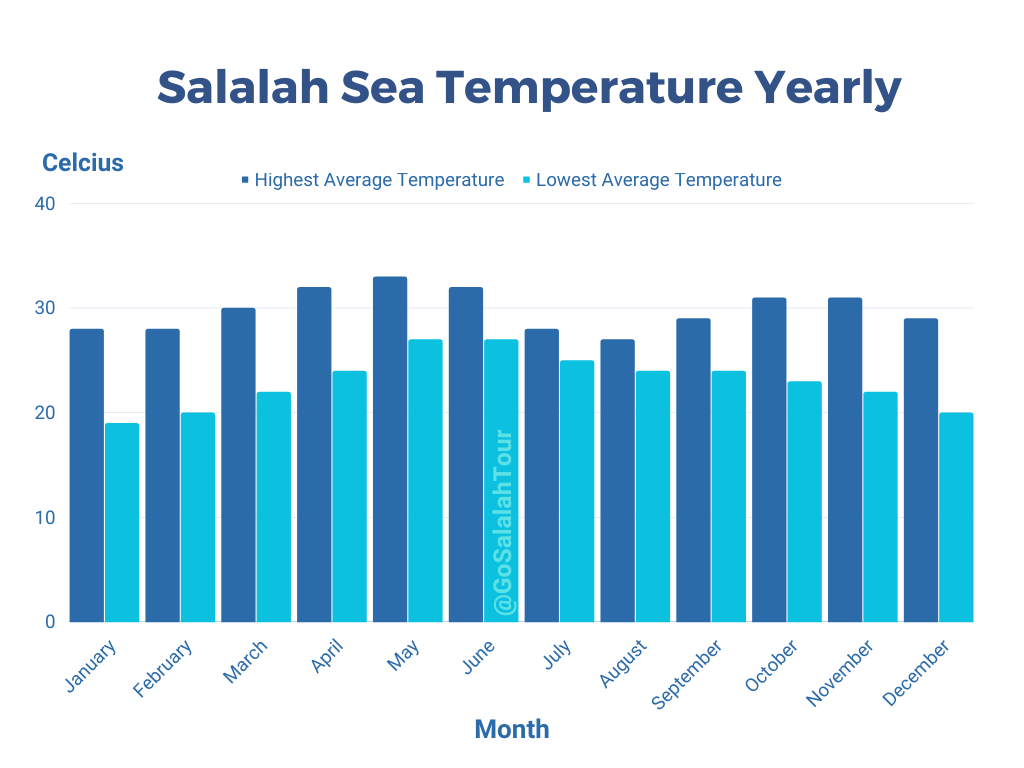
  • Sea Conditions: The ocean calms completely into pristine, turquoise waters averaging 24°C–28°C (75°F–82°F)—ideal for swimming, snorkeling, dolphin-watching boat trips, and beachcombing at Fazayah Beach.
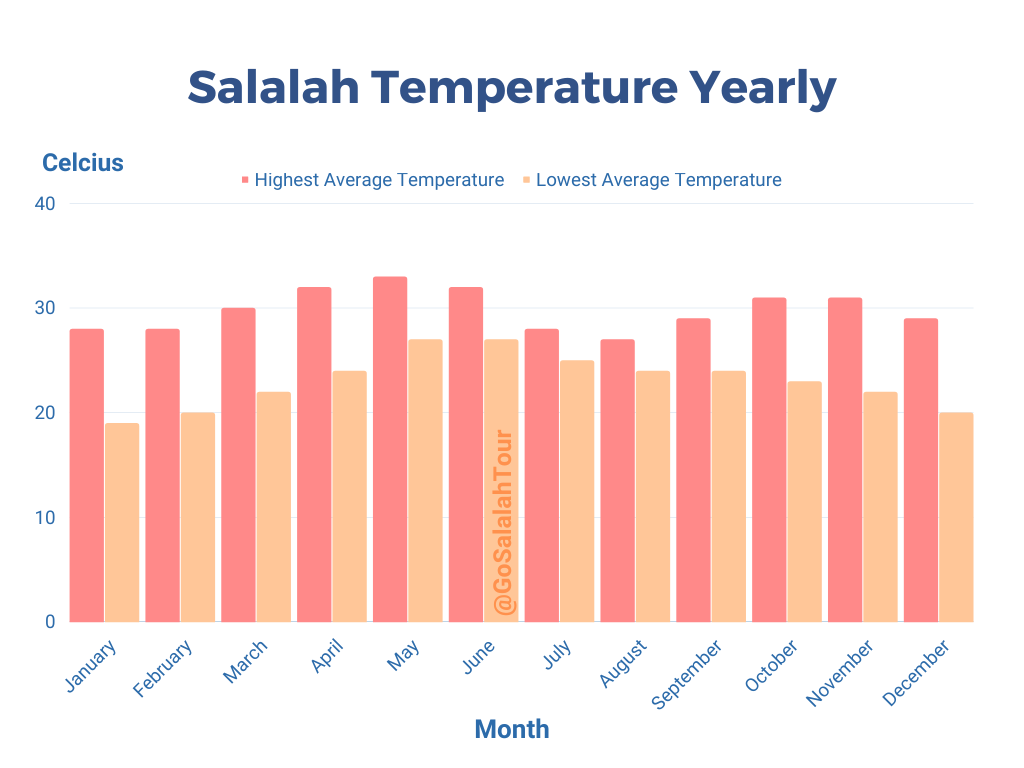
Salalah Temperature Yearly Average High and Average Low
Salalah Temperature Yearly

What to Wear & Pack for Salalah

Oman is a welcoming yet culturally conservative country. Choosing the right wardrobe ensures both comfort in the local climate and respect for local customs:

During the Khareef (Monsoon Season):

  • Light Waterproof Jacket: A lightweight rain shell or windbreaker to stay dry in mountain drizzle.

  • Sturdy Footwear: Non-slip trail shoes or water sandals for walking along damp mountain paths and wet grass.

  • Quick-Dry Layers: Breathable synthetic fabrics that dry quickly in high humidity.

During the Dry Season (October – May):

  • Sun Protection: High-SPF sunscreen, wide-brimmed hats, and polarized sunglasses for bright coastal light.

  • Light Cottons & Linens: Loose-fitting dresses, linen shirts, and lightweight trousers to keep cool.

  • Swimwear Etiquette: Modest swimwear for public beaches (rash guards or cover-ups when stepping away from swimming areas).

  • Light Evening Jacket: A light sweater or hoodie for cool desert nights or mountain summits.


Experience the Best of Salalah in Every Season

Navigating wet mountain passes during Khareef or driving deep into the golden Rub’ al Khali desert requires expert local handling. Go Salalah Tour provides private 4×4 vehicles with experienced local drivers who know every secret spot, regardless of the weather.

Salalah Sea Temperature Yearly Average High and Average Low
Salalah Sea Temperature Yearly
Sun Hours Salalah Yearly Average
Salalah Average Rainfall Yearly in mm Precipitation Salalah